

An interview with Anna Palaiologk, Founder of Future Needs
A strong technical solution is only one part of successful innovation. Who will use it? Does it respond to a real need? Is it economically viable? What might prevent its uptake? In many EU-funded projects, these are the kinds of questions that socio-economic and Social Sciences and Humanities (SSH) research can help answer alongside technical development.
In our Meet the Minds Behind the Impact series, Future Needs experts share lessons from their work in European research and innovation projects, while introducing the people behind the work.
This time, we speak with Anna Palaiologk, Founder of Future Needs, about socio-economic research, societal readiness, Responsible Research and Innovation (RRI), and why understanding people, markets and wider impacts should begin at the proposal stage.
I am Anna, a research and innovation consultant with a background in economics, and I am the Founder of Future Needs. My professional journey has focused on developing and managing European research projects that address real social, economic and environmental challenges.
Over the years, I have worked as a project coordinator, work package leader and researcher across more than 50 EU-funded projects. I have also contributed to the development of over 80 successful proposals.
My own research interests include transport economics, business development, policymaking and the social and economic impacts of emerging technologies. What connects all these areas is my interest in understanding how innovation can move beyond research and deliver practical value for people, organisations and society.
Future Needs grew from a desire to create a different kind of research and innovation organisation. I wanted to bring together people from different professional and academic backgrounds who could look at complex challenges from several perspectives. Technology is important, but technology alone is rarely enough. We also need to understand users, markets, policies, social impacts and the conditions required for a solution to succeed in the real world.
The name Future Needs reflects this approach. Our role is not only to respond to today’s problems, but also to anticipate what people, organisations and communities may need tomorrow.
Although our projects may focus on very different topics, they are connected by a human-centred approach. Whether we are working on aviation, healthcare, environmental protection or digital technologies, we tend to ask similar questions: Who will use this innovation? What problem does it solve? Is it accessible? Is it economically viable? How could it affect people’s daily lives? Are marginalised groups considered?
Depending on the project, answering these questions may require stakeholder research, socio-economic and market analysis, policy research, co-creation or societal readiness assessment.
Our work often helps connect technical research with society, policy and the market. We want project results to be understandable, usable and capable of creating impact beyond the lifetime of the project.
A technology may be technically ready, but that does not automatically mean people will use it or that there is a viable market for it.
One example comes from our work on U-space. A lot of work has understandably focused on making these services technically and operationally possible. But as deployment gets closer, another set of questions becomes important: Will operators actually use these services? What value do they see in them? What are they willing to pay? Which pricing models make sense? And how does regulatory uncertainty influence adoption?
In our “Pricing the Sky: Analysing Real-World Demand for U-space Services” white paper, developed from research in the BURDI project, we looked at exactly these questions.
What I find interesting about this type of research is that it can reveal a very different picture from technical readiness alone. A technology may work, but its users may still be highly price-sensitive, prefer a different business model or see regulatory uncertainty as a barrier. That evidence can then inform business models, policy and the way a technology is introduced to the market.
For me, societal readiness is about understanding whether an innovation is ready to work within the realities of society. It means looking at users and their needs, but also at accessibility, economic viability, policy and regulatory conditions, social impacts, potential barriers and the capacity of organisations or communities to actually use or implement a solution.
A good example is IAM-CC, a €5 million Horizon Europe project whose proposal we led and where Future Needs is now a main research partner. The project looks at the societal readiness of Innovative Air Mobility, bringing citizens and other stakeholders into the development process rather than addressing acceptance only after technologies are developed. When we were developing the proposal, we made a conscious decision to base the project on a Responsible Research and Innovation approach, so that co-creation and societal considerations are part of the process from the beginning, not something we address later.
Innovation should work for society, not the other way around. For me, that is really what societal readiness is about.
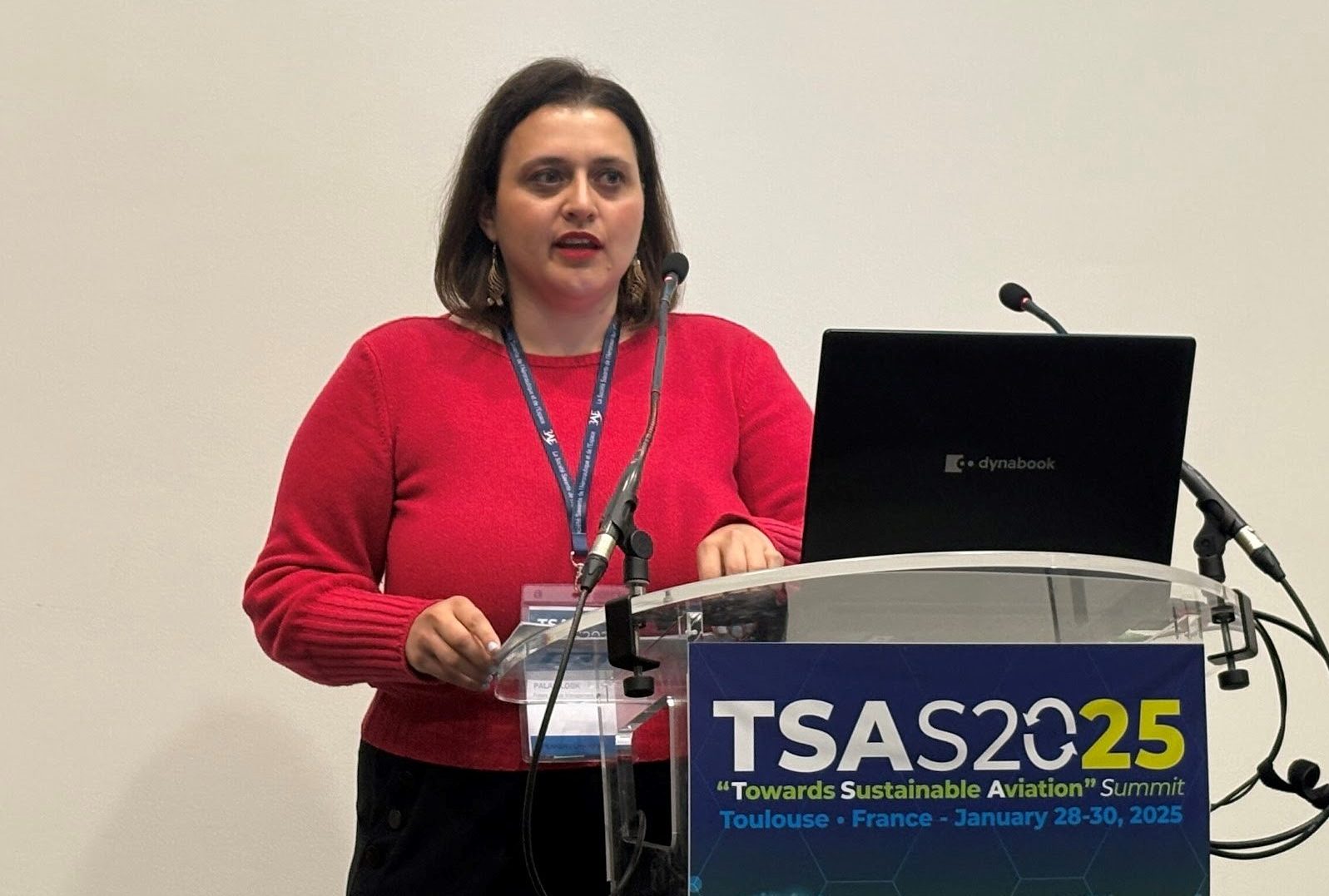


Responsible innovation means involving people from the beginning and considering the wider impact of what we create.
Researchers and technical experts should not design solutions in isolation and then ask society to accept them. Citizens, patients, professionals, policymakers and other stakeholders should have opportunities to shape the process where their perspectives can add value.
It also means looking carefully at ethics, accessibility, gender equality, environmental consequences and unintended effects.
In proposals, it is important to move beyond simply stating these principles. We need to ask: Who should be involved? Why? At what stage? What do we need to learn from them? What could change as a result? Which potential impacts should we monitor, and how will we measure them?
The indicators should come from those questions and from the actual objectives of the project. RRI should be visible in the methodology, not only mentioned in a paragraph.
I have actually developed an article on how proposal writers should address gender equality – an important aspect of RRI.
Impact assessment helps us understand what a technical solution could mean in practice, beyond whether the technology itself works.
In a Horizon Europe project, AI4LUNGS, for example, Future Needs assesses the usability of the project’s AI-based solution in regular healthcare routines and conducts a Health Technology Assessment (HTA) looking at its economic aspects, sustainability and affordability. This helps us understand the conditions needed for the solution to be realistically adopted and used in healthcare.
The same principle applies in aviation.
Take airport operations as an example. Technical partners can measure pollutants, model air quality and noise, and assess exposure. This gives us essential evidence about what is happening in the environment.
But then we need to ask the next set of questions: What does this mean for the people living nearby? We may need to quantify potential health effects, understand which groups or communities are more exposed or vulnerable, examine impacts on quality of life, estimate wider social and economic costs, and consider whether benefits and burdens are distributed fairly.
There is also value in speaking directly with affected communities. Environmental measurements tell us one part of the story; lived experience can tell us another.
This is where I see Future Needs working naturally alongside organisations specialising in areas such as emissions monitoring, air quality and noise modelling, epidemiology, environmental health, data science and airport operations. We can bring socio-economic research, stakeholder engagement, policy analysis and responsible innovation perspectives that complement the technical research.
Strong ideas are only the beginning. You need the right people, trust and space for different perspectives. EU projects bring together people from different disciplines, countries and backgrounds. This diversity is one of their greatest strengths, but it also requires trust, listening and a shared understanding of the project’s purpose. I’ve learned that good leadership is not about having all the answers. It is about giving people space to contribute their expertise on one hand but also about pushing them to dream bigger and do better. The latter may be an unpopular opinion but that is how great cross-disciplinary results occur.
For me, the value is not in arguing whether women or men are better leaders. It is about polyphony, multidisciplinarity and representation. Everyone’s experience shapes how they understand a problem, so why should science not also see problems through women’s eyes? Pluralism is a privilege for science.
I would also encourage young professionals, particularly women, to pursue leadership opportunities even if they do not feel they meet every requirement. Confidence often develops through experience. You do not need to wait until you feel completely ready before taking the next step. Jump and swim.
We are always looking for great technical partners. Future Needs is a socio-economic research organisation, so we are particularly interested in organisations whose technical and scientific expertise complements ours. This could include universities, research organisations, technology developers, businesses, public authorities and healthcare organisations across areas such as health, mobility, climate, industry and digital innovation.
Start early whenever you can. Strong proposals need time to develop, and the consortium should be built around the challenge, with complementary expertise from the beginning.
But we also know that EU proposals don’t always work like that. If the deadline is already close, focus on what is still missing. The right partner can still strengthen the proposal, fill an expertise gap or bring in a perspective that has been overlooked.
At Future Needs, we are always happy to explore how we could complement a consortium, from proposal development through to project implementation.
Depending on the project, we can contribute as a research partner in socio-economic and SSH research, stakeholder engagement, co-creation, policy, impact assessment and business modelling; as a Communication & Dissemination lead; or as an Exploitation lead supporting market analysis, Key Exploitable Results, IPR and go-to-market strategies.


